
Laboratory operations with connected analysers and verified results
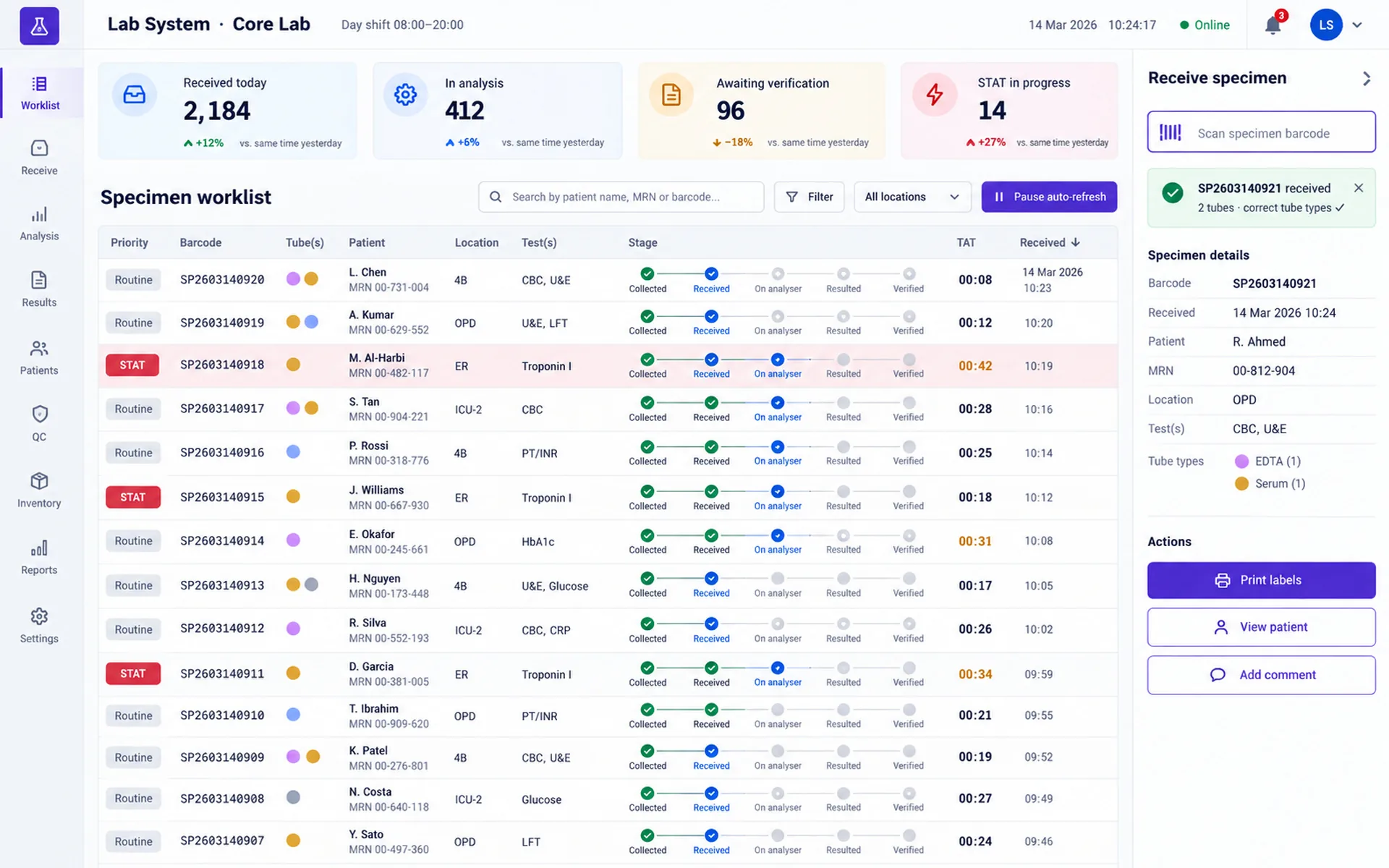
We built a laboratory information system for a 300-bed hospital processing about 3,500 tests a day. The 26-week engagement connected ward orders, collection, analyser results, quality control and critical-value calls. The core lab went live in week eighteen, with microbiology following on its own workflow.
Screens
The challenge
Staff typed results from analyser printouts into patient records, leaving doctors to catch transcription errors. Critical-value calls had no reliable acknowledgement trail, quality control lived in binders and nobody could identify where emergency turnaround time was being lost.
Our approach
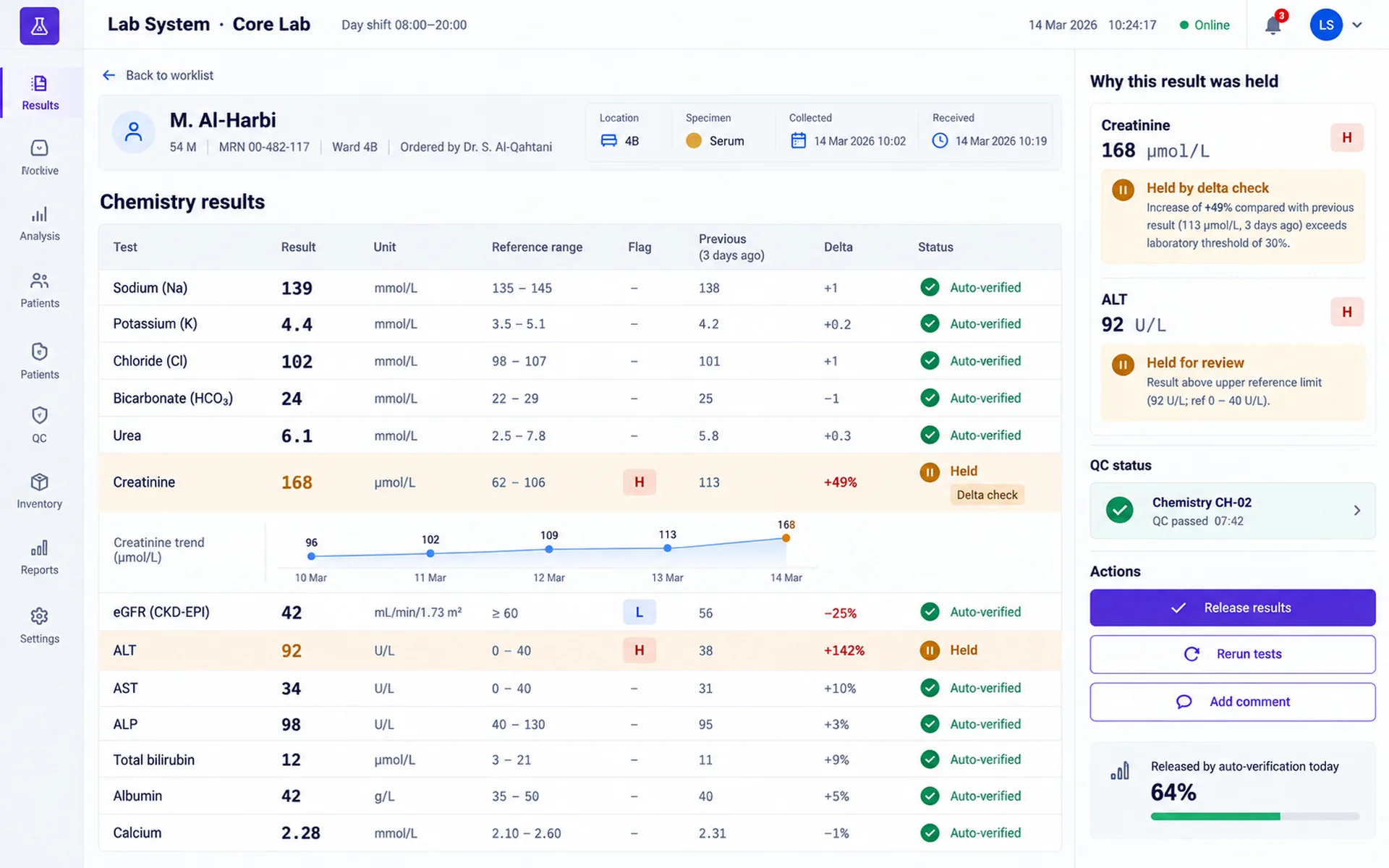
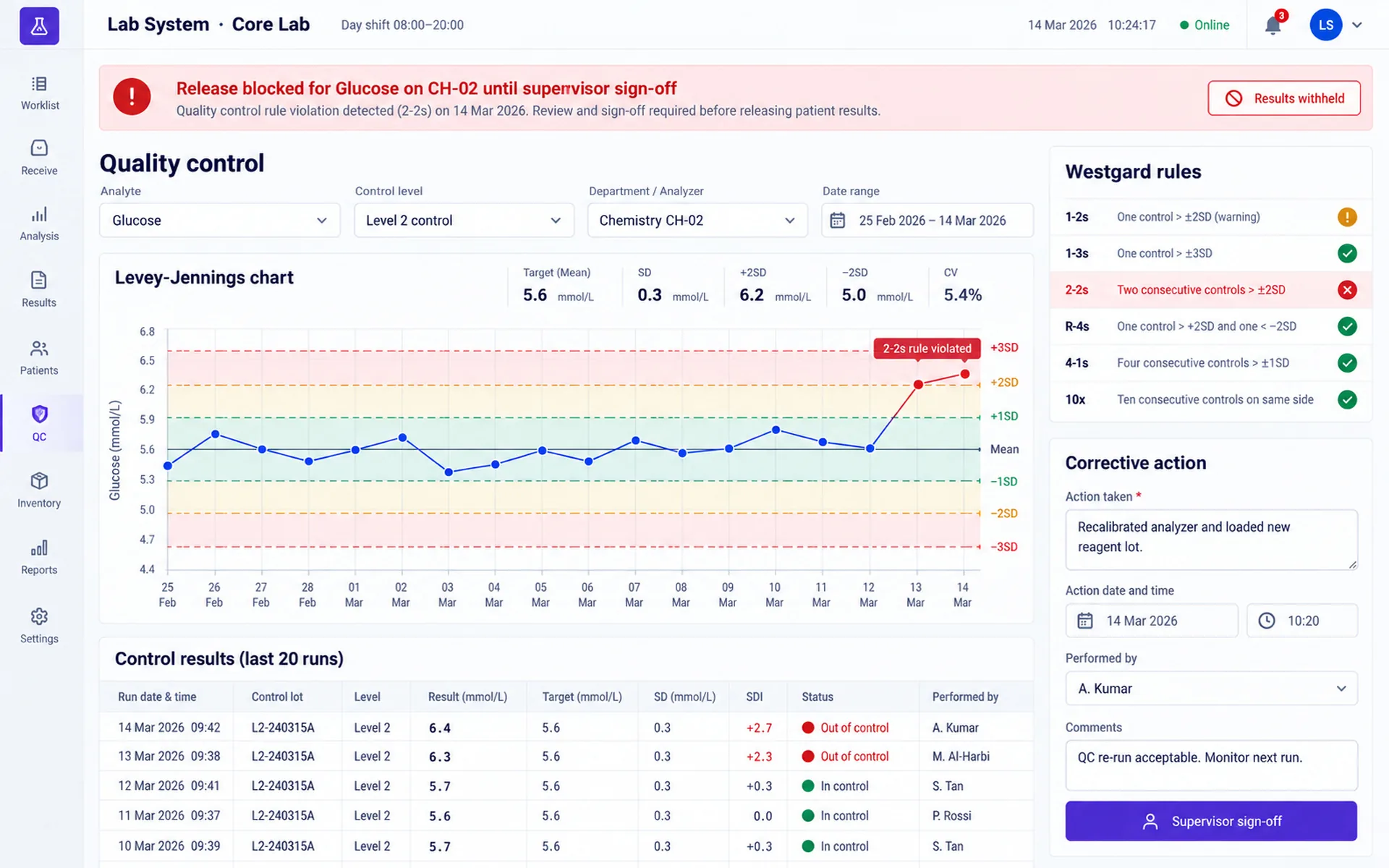
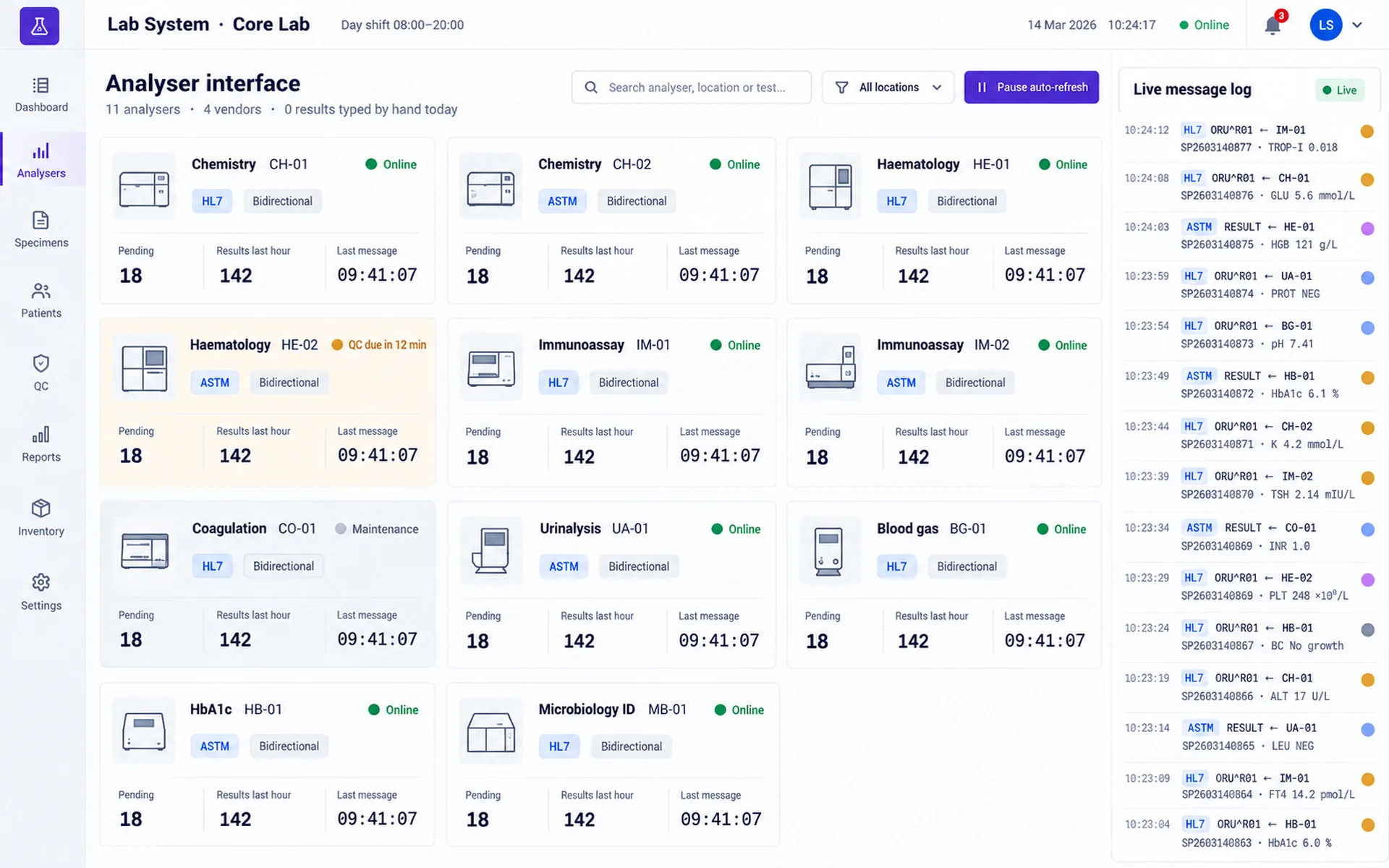
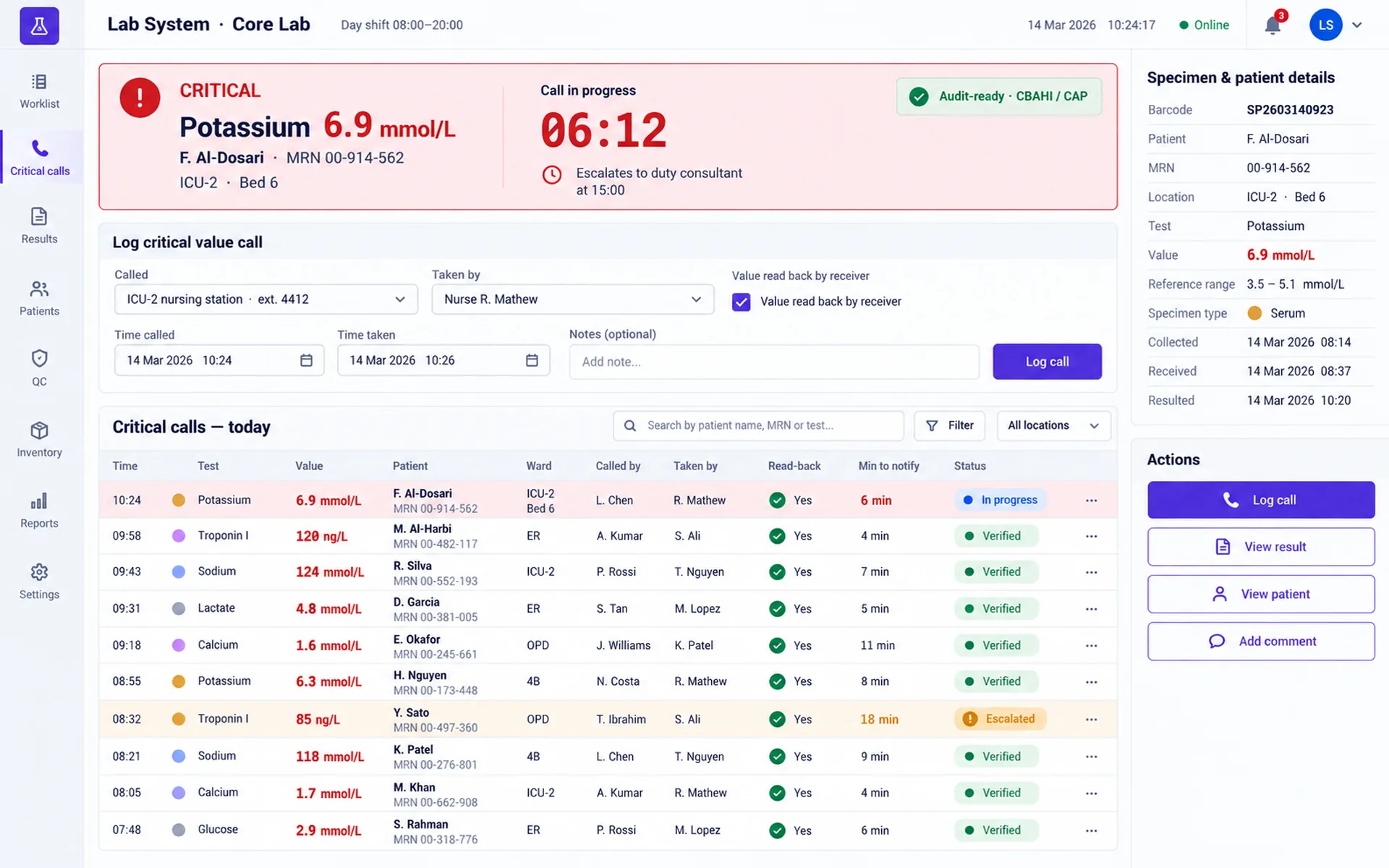
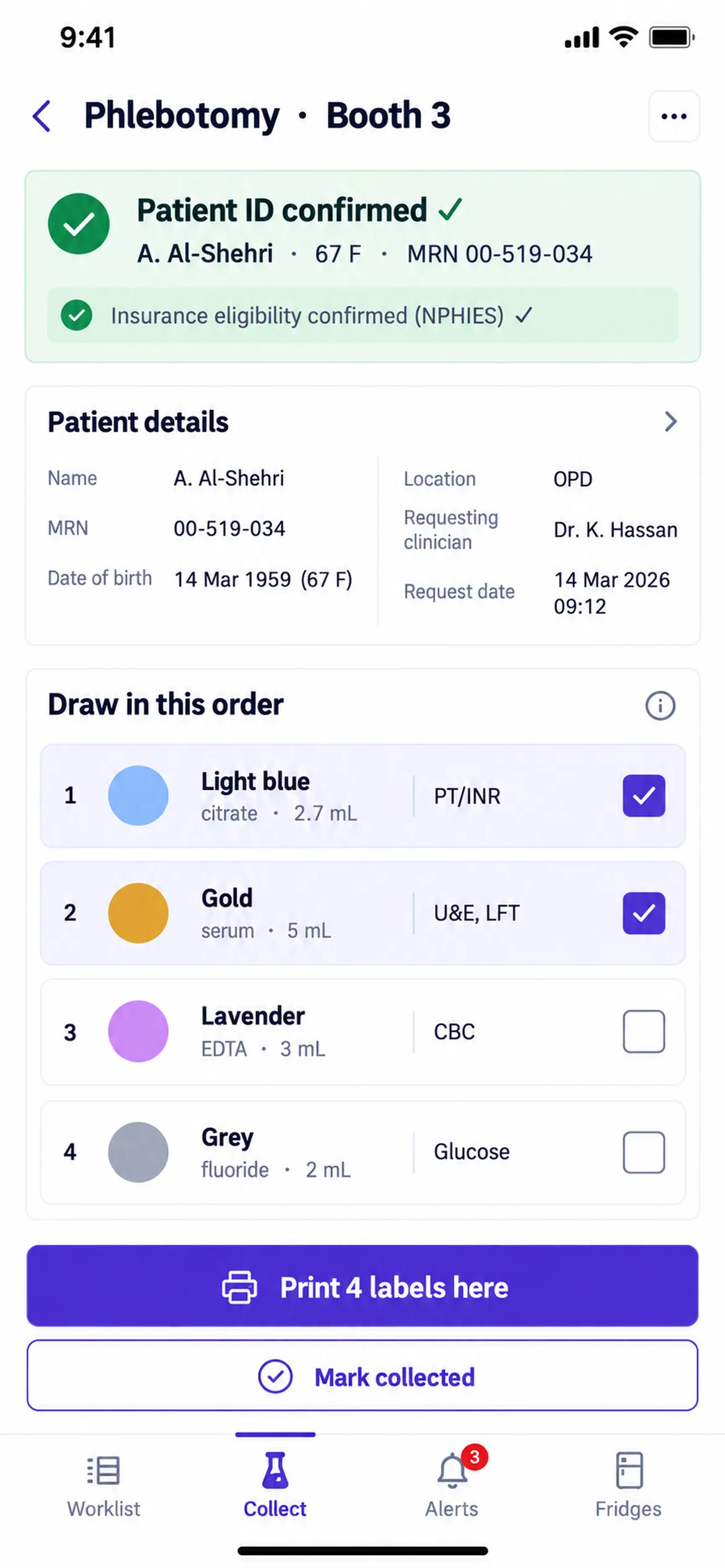
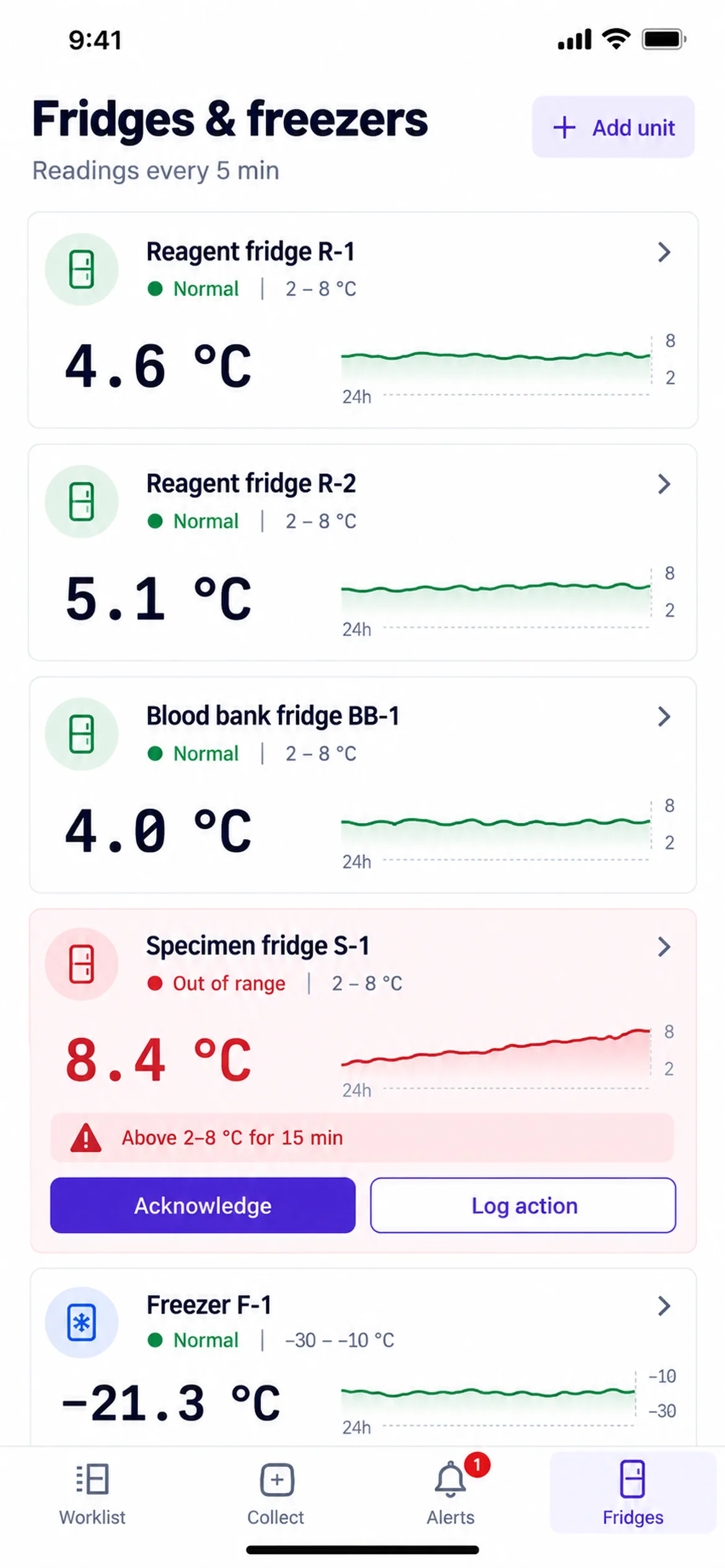
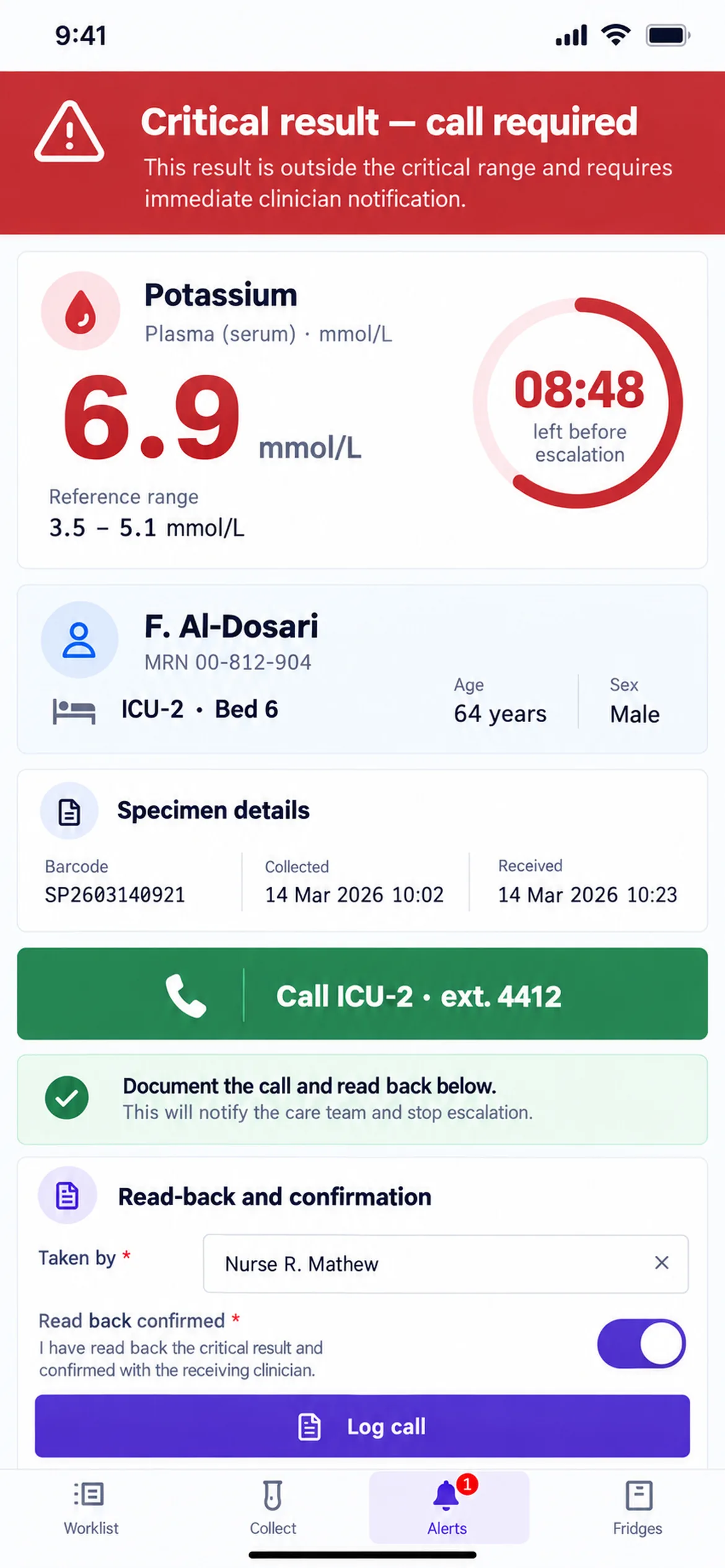
We spent two weeks observing phlebotomy, specimen reception and laboratory sections across day and night shifts. HL7 orders now trigger labels at collection, with NPHIES checks before insured outpatient samples are drawn. Eleven analysers from four vendors exchange work orders and results over ASTM and HL7. Westgard quality-control rules block release after a failed run until a supervisor signs off. Auto-verification checks QC, range and changes from previous results. Critical values start a recorded call workflow with escalation after fifteen minutes. Fridge sensors report every five minutes, replacing twice-daily clipboard readings.
Outcome
- Eleven analysers connected in both directions, removing manual entry of daily results
- 64% of results auto-verified, with abnormal, flagged or substantially changed results held for a technologist
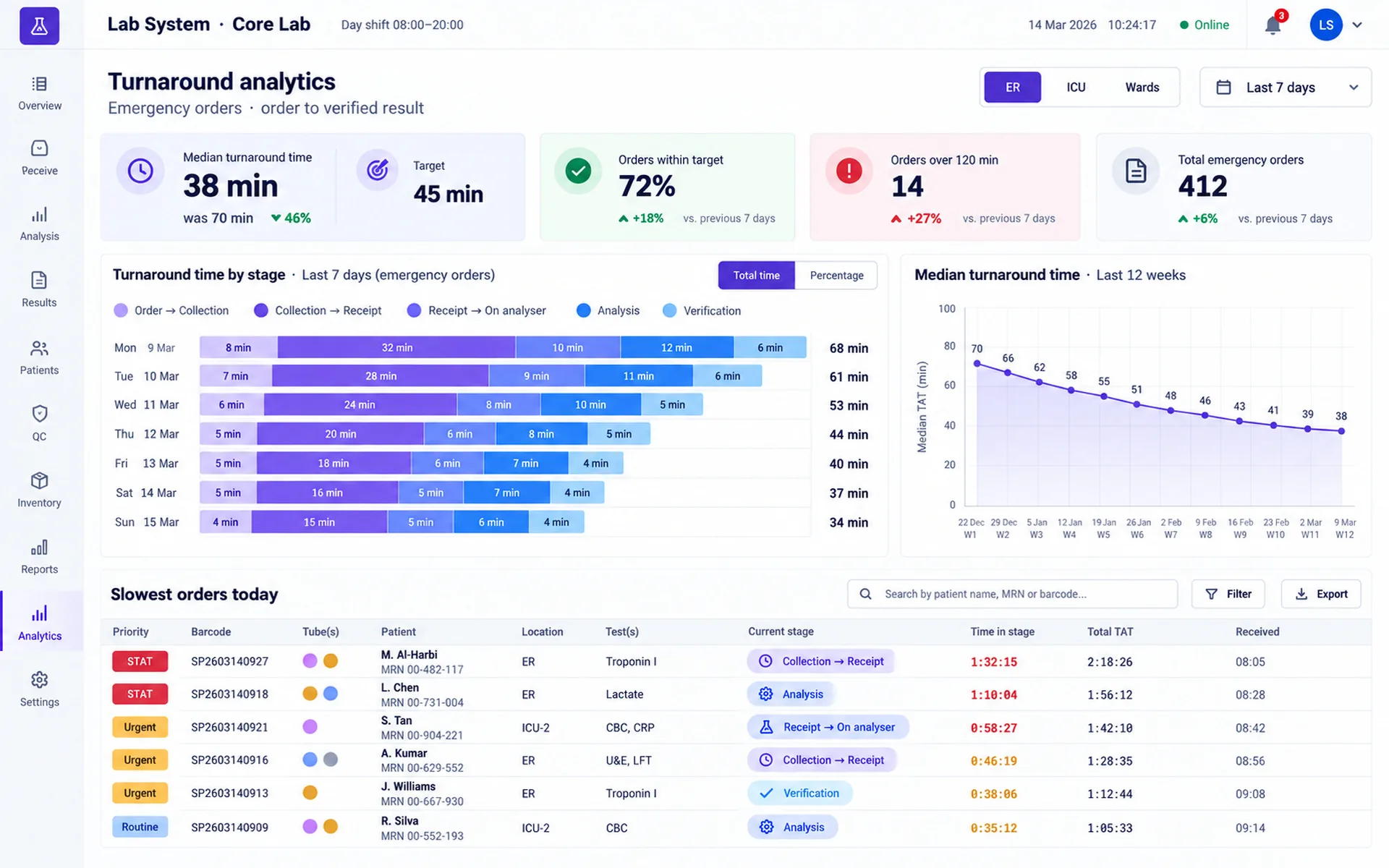
- Emergency order-to-verified time reduced from about 70 to 38 minutes, with delays visible by stage
- Critical-call acknowledgements, QC, temperatures and result edits recorded for CBAHI and CAP survey review
“Nobody on my bench types a result any more, and the critical-call log went from the thing surveyors always asked about to the shortest conversation of the visit. The night shift noticed first — they stopped leaving an hour late.”Dr. Hanan Al-Shammari — Laboratory director, Afiya Specialist Hospital
Original interfaces and workflows are protected by NDA. Images are UI recreations using synthetic data and figures. Client identity is shared with permission.